
 08/01/2026 |
  By Admin
High-temperature industrial environments place extreme stress on piping systems. Material failure can cause shutdowns, safety risks, and financial loss.
Seamless steel pipes offer a reliable solution. They are designed to perform under heat, pressure, and continuous load without compromise.
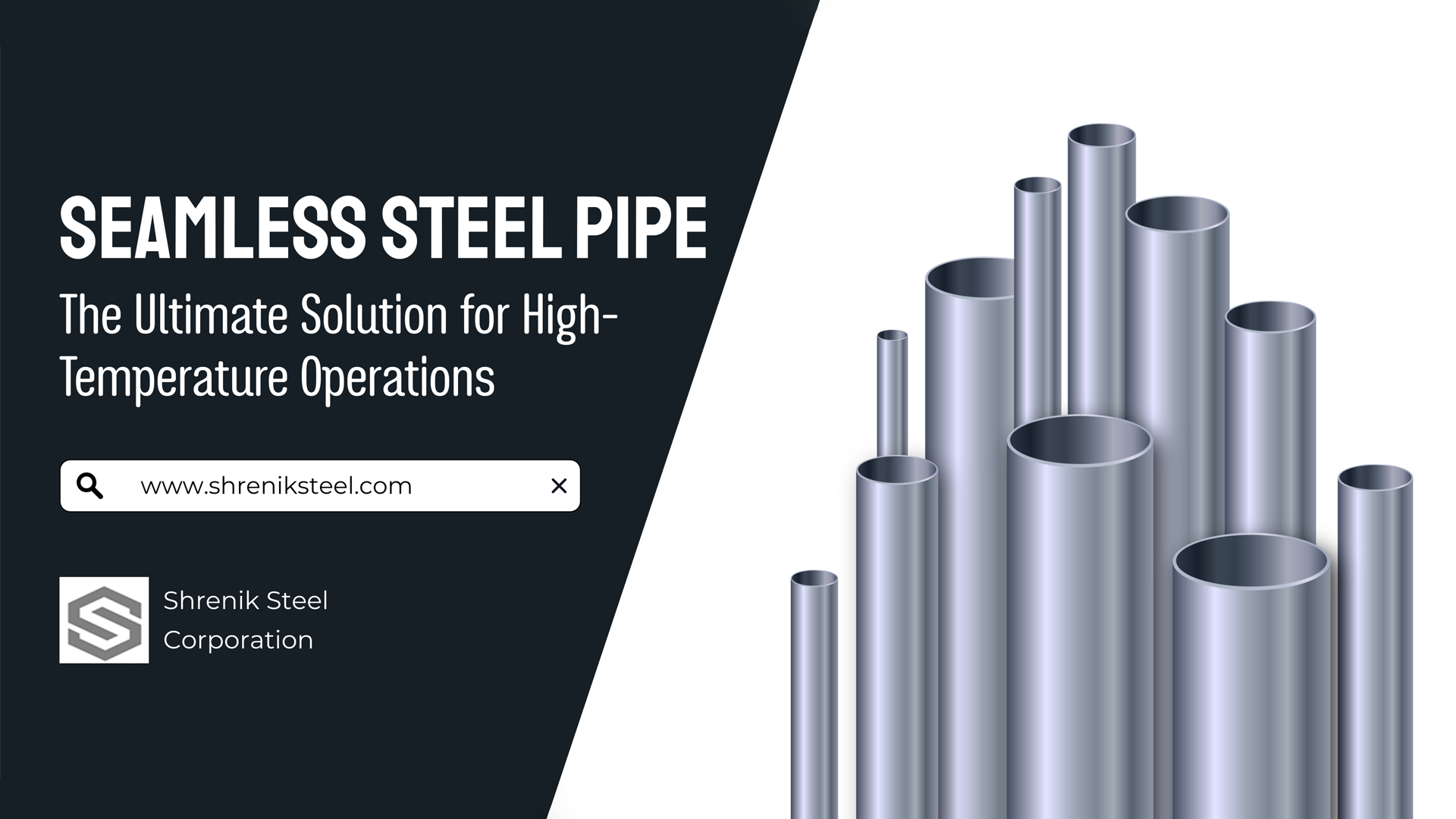
Seamless steel pipes are manufactured without welded joints. They are formed from solid steel billets and shaped using extrusion or rotary piercing.
This process creates a uniform structure. There are no weak points caused by weld seams.
Seamless pipes are widely used where strength and thermal stability matter most. They perform consistently in demanding industrial conditions.
Their structure allows:
These qualities make them suitable for high-temperature operations.
A seamless pipe is created from a solid round billet. The billet is heated and pierced to form a hollow tube.
The pipe is then elongated and sized. No welding is involved at any stage.
This results in:
In high-heat environments, this construction ensures stability and safety over long periods.
Heat affects metal structure over time. Welded joints often become stress points under continuous thermal cycles.
Seamless steel pipes eliminate this concern. They maintain integrity even at elevated temperatures.
Industries prefer seamless pipes where failure is not an option. This includes systems carrying steam, hot gases, or heated fluids.
Consistent material properties help reduce maintenance. They also extend service life.
Seamless steel pipes handle:
Their uniform structure prevents localized expansion. This reduces deformation and fatigue.
As a result, seamless pipes deliver stable performance in critical operations.
Welded pipes contain joints. These joints react differently to heat.
Under high temperatures:
Seamless pipes avoid these issues. They offer uniform behavior under heat and pressure.
Seamless steel pipes provide:
For high-temperature systems, they are the safer long-term choice.
Choosing the correct pipe requires technical alignment. Temperature range, pressure, and medium must be considered.
Important factors include:
Correct selection improves efficiency and compliance.
Popular standards include:
Each grade serves specific temperature and pressure conditions. Consulting specifications ensures optimal performance.

Copyright © Shrenik Steel Corporation All rights reserved | Powered by : #1 Vinayak InfoSoft - SEO Company Ahmedabad - Sitemap XML


